
The ideaIn one sentence
Every input you make moves load around the car: brake, throttle, steering. Good drivers move it on purpose.
The physicsWhat happens in the car
When you brake, load moves to the front axle: the front tyres gain grip, the rears lose it. When you accelerate, load moves to the rear. In a corner, load moves to the outside tyres.
Remember from the grip article: more load gives more grip, but not in proportion. So when load moves from the inside tyre to the outside tyre, the axle as a whole loses a little grip. That is why smooth driving pays off. Smooth doesn't mean slow. It means controlled.
How much load moves is set by physics: the car's mass, the height of its centre of gravity, its track width and wheelbase, and how hard you brake, accelerate or turn. The setup decides how that load is shared and how fast it moves:
- Springs and anti-roll bars decide how the load in a corner is split between front and rear axle. That sets the balance: more understeer or more oversteer.
- Dampers decide how quickly the load moves, and with it how the car reacts in transitions.
In a GT3 carAt the wheel
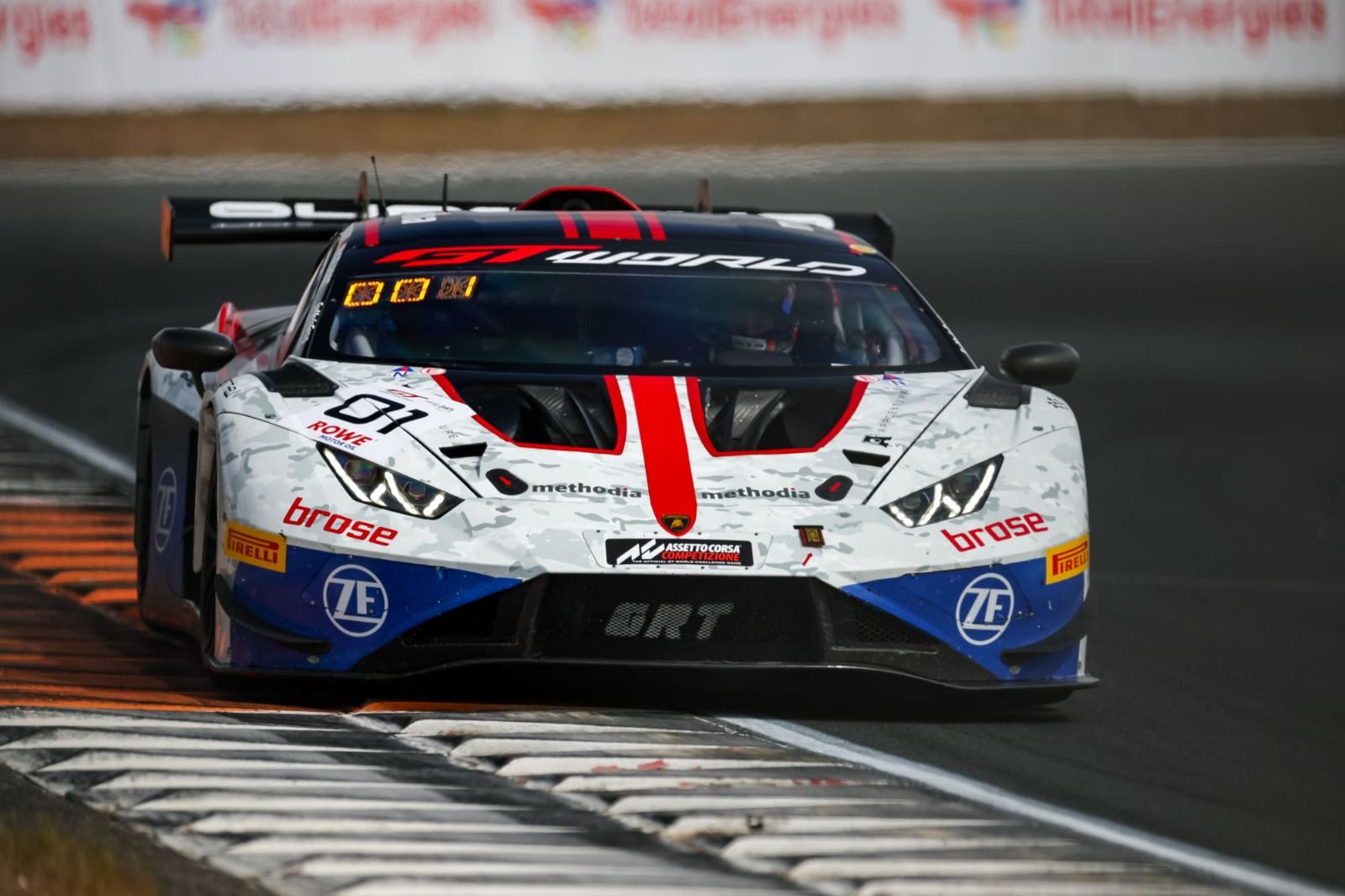
A GT3 car is stiffly sprung and works on a tight aero platform. Under braking the nose dips, the ride height changes and the aero balance shifts with it. The heavy load on the front axle under braking is exactly what helps you turn the car in, as long as you release the brake progressively.
Common mistakesWhat I see in coaching
- Abrupt inputs: snapping off the brake or stabbing the throttle unsettles the car.
- Releasing the brake too early: the front loses load just when it needs grip to turn in. The result is understeer at turn-in.
- Lifting mid-corner in panic: load shifts forward suddenly, the rear goes light and the car oversteers.
How I coach itMade visible with data
In the data I look at the transitions: how quickly the brake pressure comes off, how the throttle goes on, how steering and cornering force react. With the video we see where the car gets unsettled, and whether the cause is the driver or the setup. That's where my engineering background makes the difference: sometimes the fastest fix is a change to the car, not to the driver.
Want to work on this with me?